Curious about what classes to take? We caught up with faculty members in the Department of English in the College of Liberal Arts and Sciences to discuss what students read and learn in some of the most popular courses. Read more in this Q&A to learn about the department’s robust curriculum.
ENGL:3267 Medieval Norse Literature with Professor Jon Wilcox
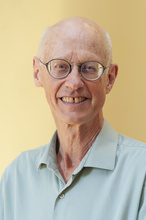
What is the focus of the class?
There are two major foci for this course: a sampling of the Old Norse family sagas, which provide rich and seemingly realistic insights into a pre-modern society, and a sampling of the surviving record for a pre-Christian northern faith in Old Norse mythological poetry. Those two foci allow for significant engagement with fascinating (and often unfamiliar) literary forms and they combine to give a picture of a north-west European society in transition.
How did you get interested in this area of literature? Why is it important to you?
I am a scholar of medieval literature with a particular interest in early medieval England. However, nothing written in English in this period matches the richness of the surviving Norse literary corpus. Sagas give texture to the portrayal of society through stories that often center on conflict or exploration, but also include rich details of everyday life impossible to find elsewhere. In addition, while Christianity brought with it the record-keeping technology of writing to Europe, in the Norse world some writers used that technology to preserve texts from and accounts of the earlier faith. The result is an unusually rich record of the thought-world and the everyday life of a society that was adjacent to, and partly occupied, early medieval England.
What do you enjoy most about teaching the class?
This wonderful range of material can challenge students in many ways. Sagas are long prose narratives told with apparent verisimilitude verisimilitude–which sounds a lot like novels–but they are not the same as novels. Investigating the differences encourages consciousness about both literary forms. Spotting how inner thought and emotion are conveyed in an apparently flat and objective style sharpens students’ reading skills. The society portrayed looks alien to modern readers and yet the literature provides enough insight for a pretty full understanding to be built up with remarkable speed. Encouraging students to discover context from content encourages a kind of smart close reading and a skill that can be transferred to any literature.
If someone wanted to start reading some texts on this topic, where would you recommend they start?
There is a very short piece, often titled “Audun’s Story” or “Audun and the Bear,” detailing the adventure of a modest Icelandic farm-hand who makes a trip to Greenland, acquires a live polar bear, takes it back to Norway but declines to gift it to the king, and continues to that king’s arch-enemy the King of Denmark, to whom he gives the bear. It nicely gets at ideas of exploration and risk, of value and of power, of faith, and above all of the role of storytelling—all in a very short story, just eight pages of a modern translation (most easily accessible in a Penguin Classics volume, Hrafnkel’s Saga and Other Icelandic Stories). For a fuller reading, Egil’s Saga describes the adventures of a quintessential Viking, who combines composing poetry with the more predictable activities of raiding and trading. For sampling the poetry, The Elder Edda is the title given to the sequence of mythological and heroic poems that survive in a single manuscript and give key insights into an earlier faith world.
ENGL:3700 Topics in Craft and Method: Uses and Abuses of Science Fiction with Professor Tom Lin

What is the focus of the class?
This course is focused on the affordances of science and speculative fiction. What does this mode of storytelling allow us to do that ordinary realist fiction doesn’t? What assumptions, beliefs, and perspectives does science fiction reproduce, and how can we write within and beyond them? In some ways this is a survey course of 20th century science fiction—we read classics like Ursula K. LeGuin’s The Dispossessed and watched movies like Andrei Tarkovsky’s Solaris (1972). In other ways it’s a semester-long rumination on the weird, the unsettling, and the power of texts to fashion worlds both like and unlike our own—we encountered works that seemed to be limit cases for what we might accept as science fiction, like Pierre Huyghe’s Untitled (Human Mask), a 19-minute film following a trained monkey wearing a mask that makes it look like a human girl.
How did you get interested in this area of literature? Why is it important to you?
I’ve always been a science fiction reader. I’m fascinated by its relation to the future (and whether such a relation exists in the first place), its toolbox of thinking about otherness and radical difference, and the flash and excitement of its stories. I think of science fiction as a fundamentally hopeful literature—for me, it offers a view of the human project in terms of the making and keeping of promises, not only to ourselves but also to what we could be. And, of course, science fiction is also intriguing because it appears to participate in the production of modern technoscience. It’s become axiomatic to say things to the effect of modern life approximates science fiction, or what was science fiction is now science fact. I’m interested in the precise linkages between the worlds of science fiction and this world in which we all have to live; how exactly does fiction become fact?
What do you enjoy most about teaching the class?
In-class discussions are the best part of teaching this course. Science fiction is in the business of raising big questions, and our class is in the business of trying to answer them—or at least, trying to figure out how these texts are articulating and staging those questions. I get to hear a room full of brilliant students having frank conversations about what society should strive toward, about the possibility of understanding aliens, about human agency under duress. It’s energizing and lively.
If someone wanted to start reading some texts on this topic, where would you recommend they start?
It’s a gigantic area! An extremely inexhaustive list, in no particular order, to no particular end, but which might be interesting to the new acolyte of science fiction: James Tiptree Jr., Her Smoke Rose Up Forever; Octavia Butler’s Lilith’s Brood series; Nalo Hopkinson, MidnightRobber; Robert Silverberg ed., The Science Fiction Hall of Fame, vol. 1; Kim Stanley Robinson’s Mars trilogy (Red, Green, and Blue Mars); Stanislaw Lem’s Solaris, preferably Bill Johnston’s 2011 translation.
ENGL:3145 Editorial Practice with Assistant Professor of Instruction, Julia Conrad
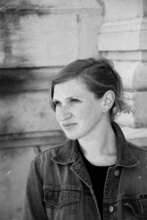
What is the focus of the class? What kind of hands-on work do students do?
Editorial Practice introduces students to what exactly an editor does all day beyond line-editing with a red pen and takes them behind the scenes of magazine and book publishing. The course is designed to give students hands-on experience editing work in every genre: from short fiction and essays to book proposals, novels, narrative nonfiction, genre fiction, and translation. The students practice line-editing professional writing generously shared by our visitors, and I also have them commission new work, write author feedback, and pitch books to an editorial board—all with professional feedback based on my experience as a writer and agent. By the end, they gain a clear-eyed sense of what exactly an editor does—and the many unseen ways editors shape the books we see at a bookstore.
How did you get interested in this area of publishing? Why is it important to you?
That question actually dates back to when I wrote writing workshop letters as a college creative writing student and imagining the many directions a draft could go. My instincts were entirely based on what I had been taught about writing, and my own reading—but both of these responses were culturally produced. We often talk about editing as about “gut instinct”—and there is an element of that—but I’m interested in thinking critically about what values are being imparted through the editor.
It might sound obvious, but what an editor believes her role is directly impacts the published writing you read, analyze, and take inspiration from. How does an editor working on a voluntary basis at a kitchen table differ from an editor with target earnings and audience reach that he needs to meet? Who has creative control over the text and how does that impact the text itself? Like in any literary or writing course, we’re looking at prose and how it’s constructed, and unpacking the context and aesthetics that make us ascribe literary value to it. My goal is to emphasize that there are many approaches to editing that we can analyze, and no single "right" answer.
What do you enjoy most about teaching the class?
Oh man, it's hard to choose. Selfishly, I’ve absolutely loved learning from students about sub-genres, micro-communities, books, and publishing trends that I never knew about. They taught me what a "space opera" is, for example, and we had a heated discussion about fan fiction bestsellers and what the role of the editor is there.
I’ve also really loved seeing the students’ editing styles change dramatically. After a lesson on the radical, controversial editor Gordon Lish, the class practiced "radical editing,” and many went from being deferent with suggestions to really advocating for their editorial opinions. Now many of them are noticing subtle things about texts that even the "real life" editor didn't challenge.
What aspects of this course are critical for a student's development on the publishing track?
The first two courses on the publishing track are all about developing your own practical publishing skillset, as a writer and publisher of DIY zines in Publishing 1 and a collaboratively created book in Publishing 2. This course builds on those essential skills while introducing what the role of the editor is in the US publishing industry, from literary journals to commercial publishing. It also provides students with practice, feedback, and tools for applying to internships and entering the professional literary world. Above all, I think studying editing is a great way for English or Creative Writing majors to bridge their knowledge of workshopping in creative writing courses, and literary analysis in lit classes—to understand more deeply how great texts come into being, and how to edit their own work.