Professor Bonnie Sunstein will retire at the end of the 2025-2026 academic year, marking more than five decades of teaching and a career in which she shaped generations of writers, teachers, and scholars at the University of Iowa.
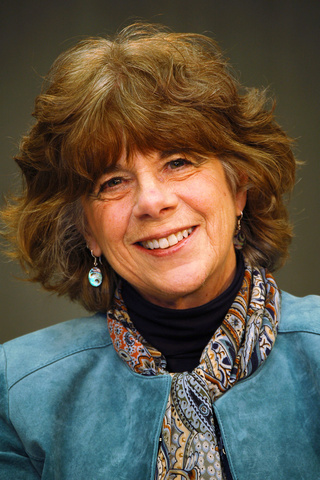
Sunstein graduated from Boston University in 1968 with a BA in english and education. Her career began in public education, teaching in middle and high schools in Chelmsford, Massachusetts. She obtained her MEd in english education at Boston University in 1975, and a PhD from the University of New Hampshire in 1991. Sunstein taught at the University of New Hampshire, Rivier College and Northeastern University before she joined the University of Iowa in 1992 to teach english and education.
At Iowa, Sunstein taught nonfiction writing, ethnographic research, folklore studies, and methods of teaching writing. Her leadership helped shape the landscape of writing and English education at Iowa. She served as chair of english education from 2002 to 2015; director of undergraduate writing from 2002 to 2018; and director of the Nonfiction Writing Program (NWP) from 2016 to 2018.
Her tenure is distinguished not only by her leadership and scholarship but the communities of writers and teachers she mentored and taught with generosity and insight. She led community-oriented teaching initiatives which demonstrated her belief in writing as a communal act, including annual masterclasses taught by NWP students in Iowa City, the Writers Gone Public reading series and the Collaborative Writing Consultancy for graduate students.
Sunstein’s scholarship in the field of education is also highly influential. She is the co-author of the award-winning book FieldWorking: Reading and Writing Research, now in its fourth edition and widely used in classrooms around the world. Her books What Works: A Practical Guide for Teacher Research and Composing a Culture, along with numerous chapters and articles have shaped the fields of writing pedagogy and teacher research. She also served as a guest editor for the Journal of Folklore and Education, and remains actively engaged in scholarship up to her retirement, including work on a new book on teaching nonfiction writing and major revisions to the Turabian Student’s Guide to Writing College Papers for the University of Chicago Press.
Alongside her accolades and leadership, what students remember most fondly is Sunstein’s commitment to those she taught. Writer and mentee Jessie Kraemer recalls when she met Sunstein in 2019, as a graduate student at the NWP. “It was clear immediately how much Bonnie cared about her students and the community," Kraemer said. "She is such a committed educator, caring friend, and curious ethnographer. It’s hard to describe how far-reaching Bonnie’s teaching is—how many students she has mentored, in education and in nonfiction and how many of the writers I admire have worked with her."
Andre Perry, executive director of Hancher Auditorium and the Office of Performing Arts and Engagement at the University of Iowa, also remembers the impression Sunstein made on him as a graduate student at the NWP. “She offered immediate and consistent support for my classmates and me. She truly wanted us to feel cared for while we moved through the program. She made us feel like family immediately," Perry said. "I took her ethnography course in my first semester. The research foundations I learned in that class have been enduring aids in my writing and the way I approach the world. Bonnie helped us understand how to ask questions and paint full, if messy, portraits of the communities and cultures we explore in our writing."
Darius Stewart, a PhD candidate and instructor in the Department of English at the University of Iowa, also says Sunstein’s mentorship has been indispensable to his learning at Iowa. “Bonnie possesses a rare ability to listen not just to what is on the page, but to what the work is striving to become," Stewart said. "She is often the first person I turn to when an idea feels unwieldy, knowing she won't simply prescribe a fix but will instead ask the questions that unlock new possibilities.”
However, it is Sunstein’s consistent and thoughtful approach to mentorship that has stands out to scores of her students. “What stays with me most is Bonnie’s way of "thinking beside" her students. She mentors through curiosity rather than authority, looking laterally to other disciplines and art forms to help us solve problems," Stewart said. "She taught me that the work we are most afraid to attempt is often the work we most need to make."
Kraemer also recalls how Sunstein’s instinctive empathy singled her out as a transformative teacher. “I felt so cared about and understood. When I wrote my thesis, a project about heartbreak, about love and logic—having her empathy and eager, sharp readership in the room really helped me comprehend the book. Being championed by someone who really believes in your work can make things seem really possible.”
Sunstein’s former students also talk of how she supported and championed their achievements long after graduation. “At every turn, she has looked out for me, as a friend and mentor, as I move through my life and career. Outside of the classroom, she demonstrated the importance of family—what it means to show up for those we love across the many chapters, good times, and challenges we experience," Perry said. "She’s had an incredible, positive influence on so many students and colleagues over the decades. She’s retiring but I know she’ll keep learning and sharing love with her friends and family all over the world.”
Sunstein has received grants from the National Endowment for the Humanities, the Woodrow Wilson Foundation, Imagining America, the STEM network, and the National Council of Teachers of English. At Iowa, she has received the Collegiate Teaching Award, the Gerber Award for the Teaching of Writing, three Obermann Center Research Fellowships, and two Arts and Humanities grants. Nationally, she served as chair of the Norman Mailer Writing Awards for student writers and has taught at institutes across the United States, Canada, and abroad.
Director of the Nonfiction Writing Program, Professor Melissa Febos, says, “Bonnie has been an indelible part of the NWP community—her unflagging support of and affection for our writers has meant the world to cohort after cohort of essayists. We have treasured and relied upon her programmatic memory, wisdom as an educator, and devoted enthusiasm for the work and careers of our graduates. We are delighted to celebrate her deserved retirement, now and always!”
Sunstein’s retirement marks the close of an extraordinary career, spanning 57 years in education. Her programs, books, teaching methods, and—most of all—the thousands of students she taught will continue to carry her work forward.